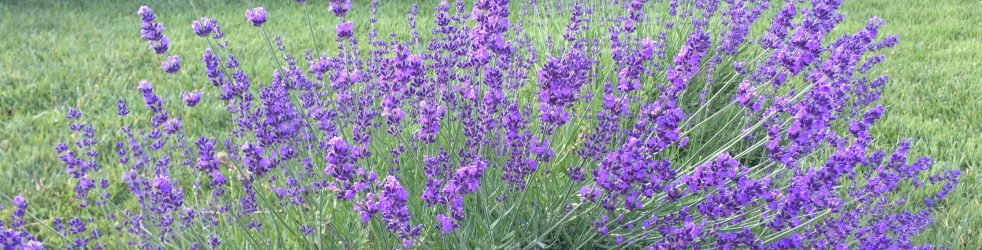
Here we are on the last day of September, and weather-wise, it could be any day in early June. Except better, because in June you don’t have the crisp feel of the air as it blows through the drying leaves, sending them fluttering to the ground like golden confetti. You also don’t have the golden tint to the light, perhaps enhanced by the changing color of the leaves or the decreasing angle of the sun. And wafting through the air there is the faint smell of dried leaves and smoldering fires. It’s definitely autumn, but it’s warm enough to be early summer… a day to be savored.
Out in the gardens, the monarchs still fly from flower to flower, but now with a sense of urgency. 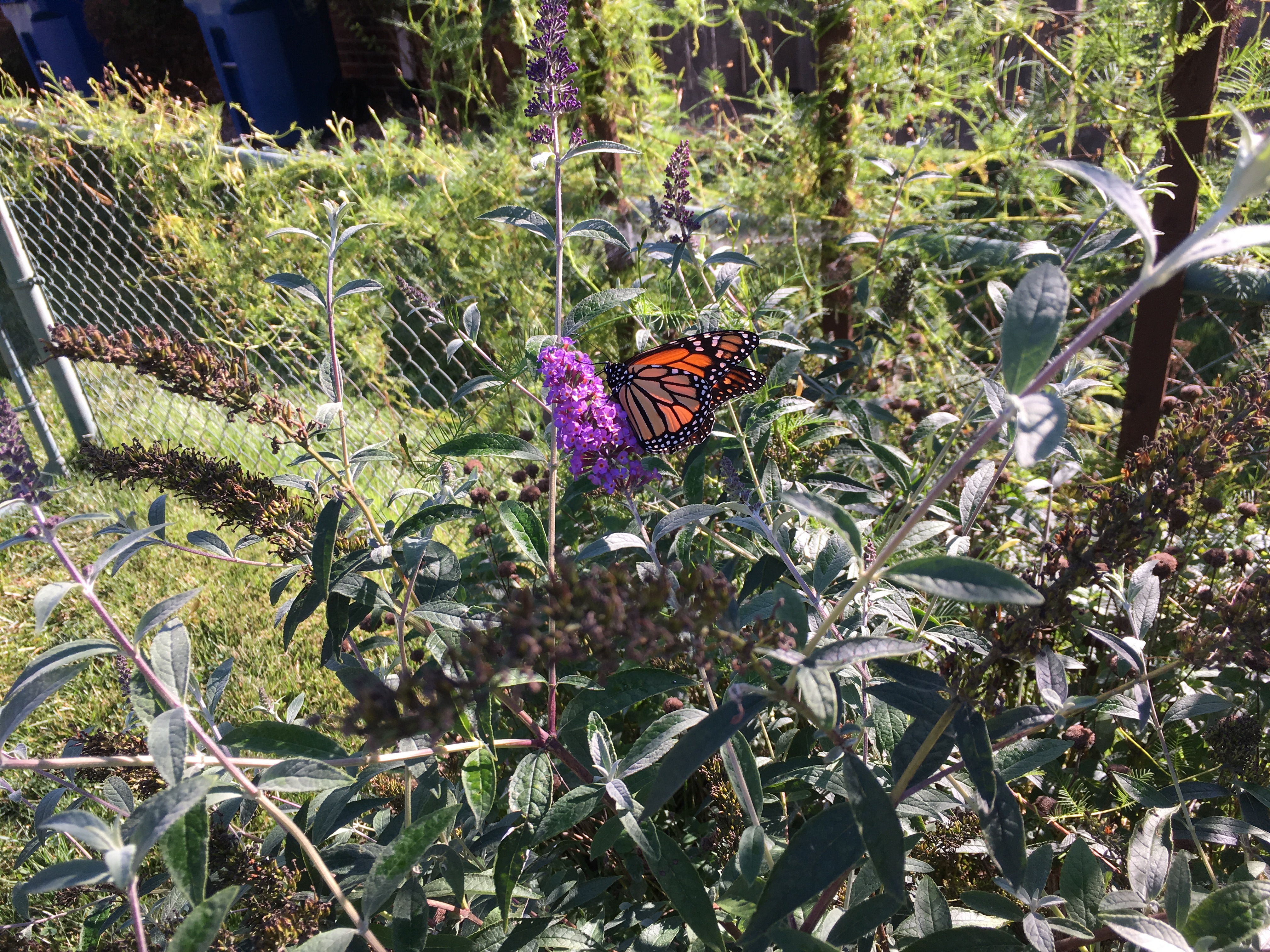 Most likely it’s my own mind silently urging them to quickly eat all they can and head south before the weather changes. The hummingbirds are still here, too, although it’s hard to know if they’re the same hummingbirds that I saw last week. The tree frogs still sing and the mosquitoes still bite; summer–in its early fall form–is still here.
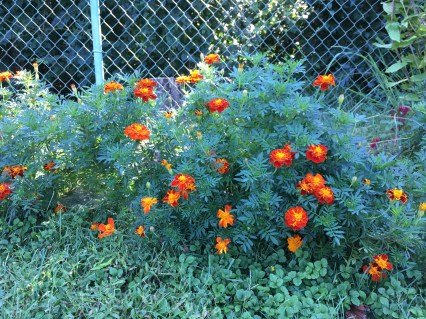
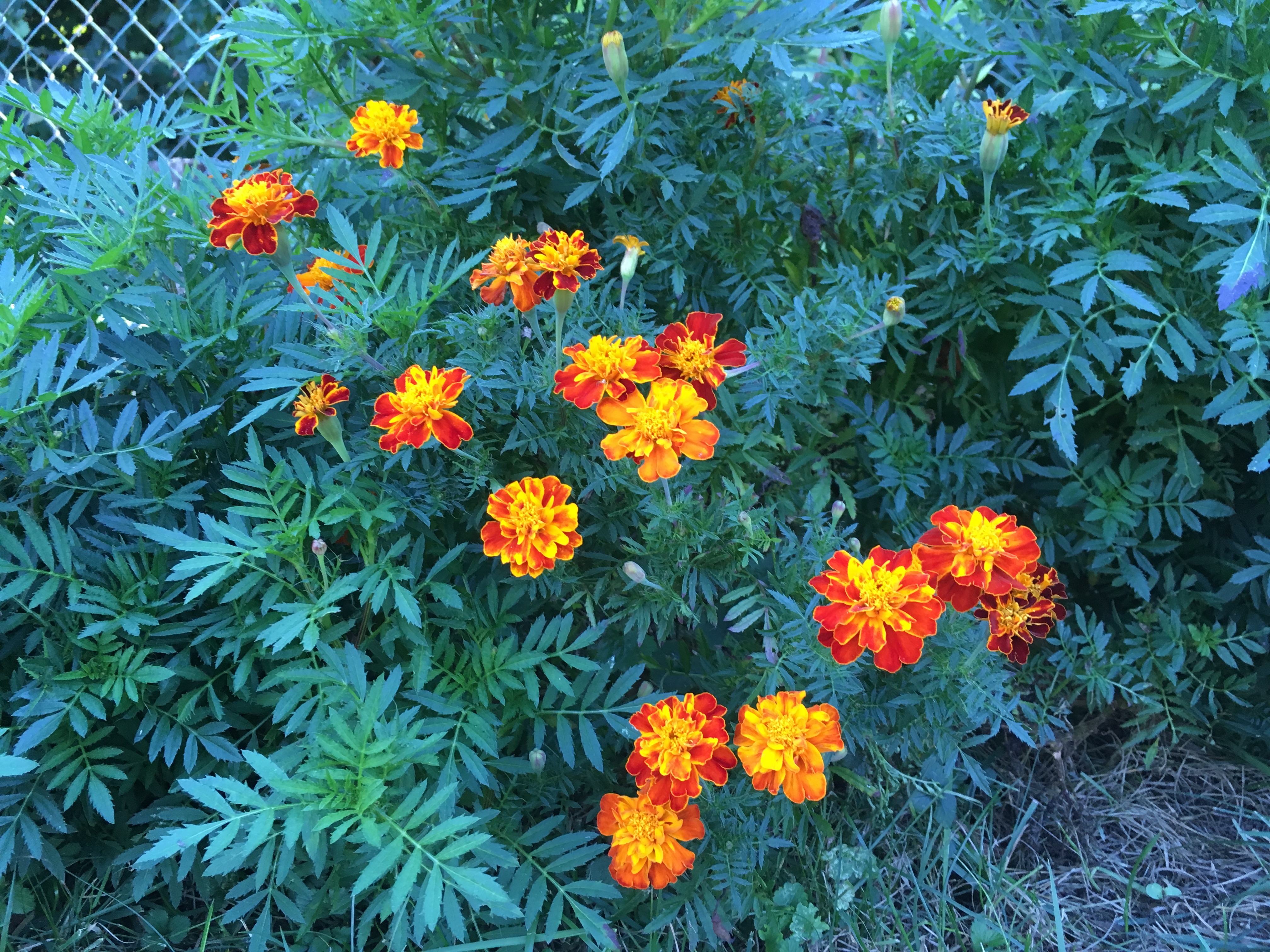
Our gardens continue to bloom, with the zinnias showing their usual impressive staying power and the marigolds exploding with rusty-orange blossoms.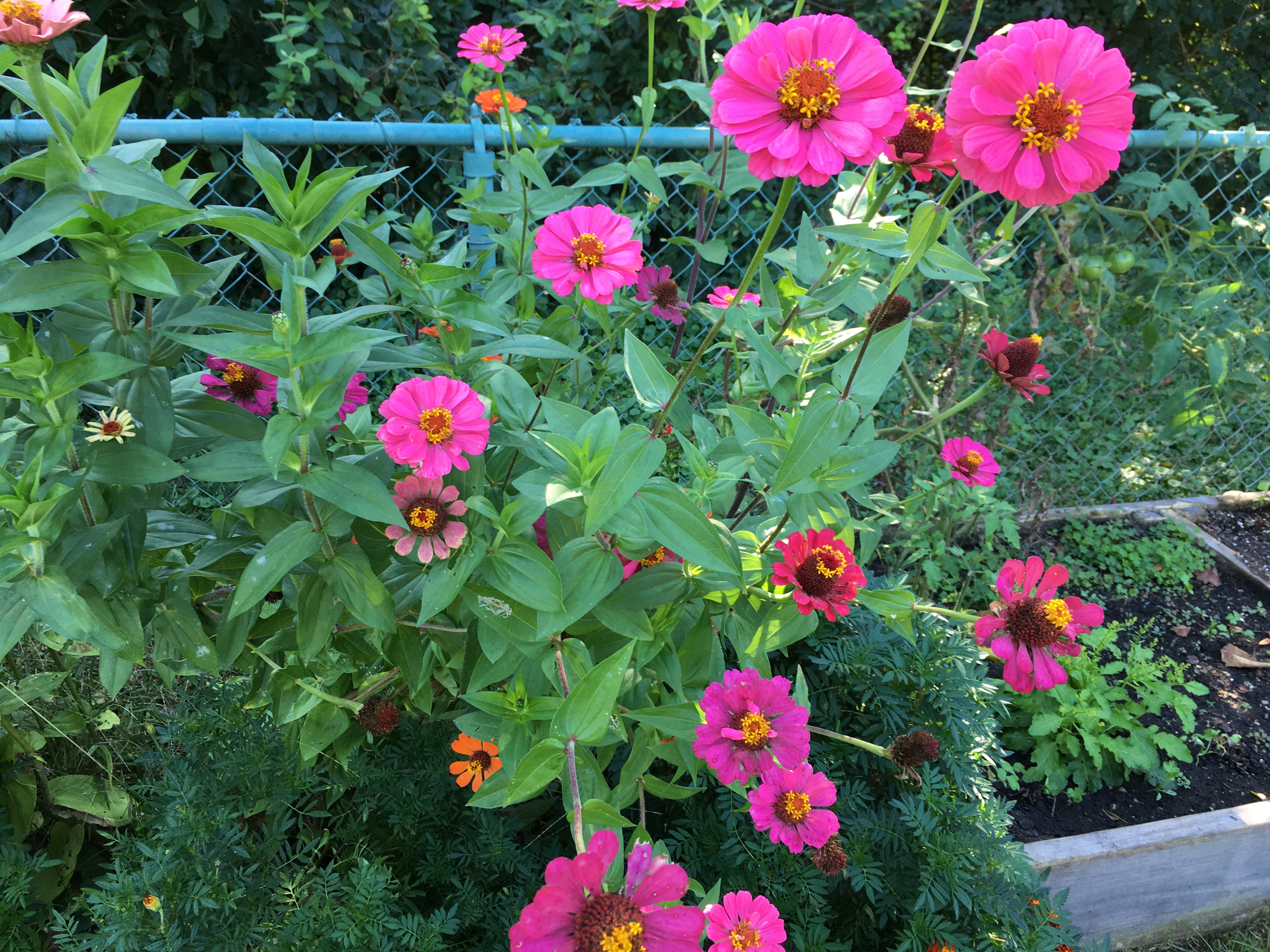
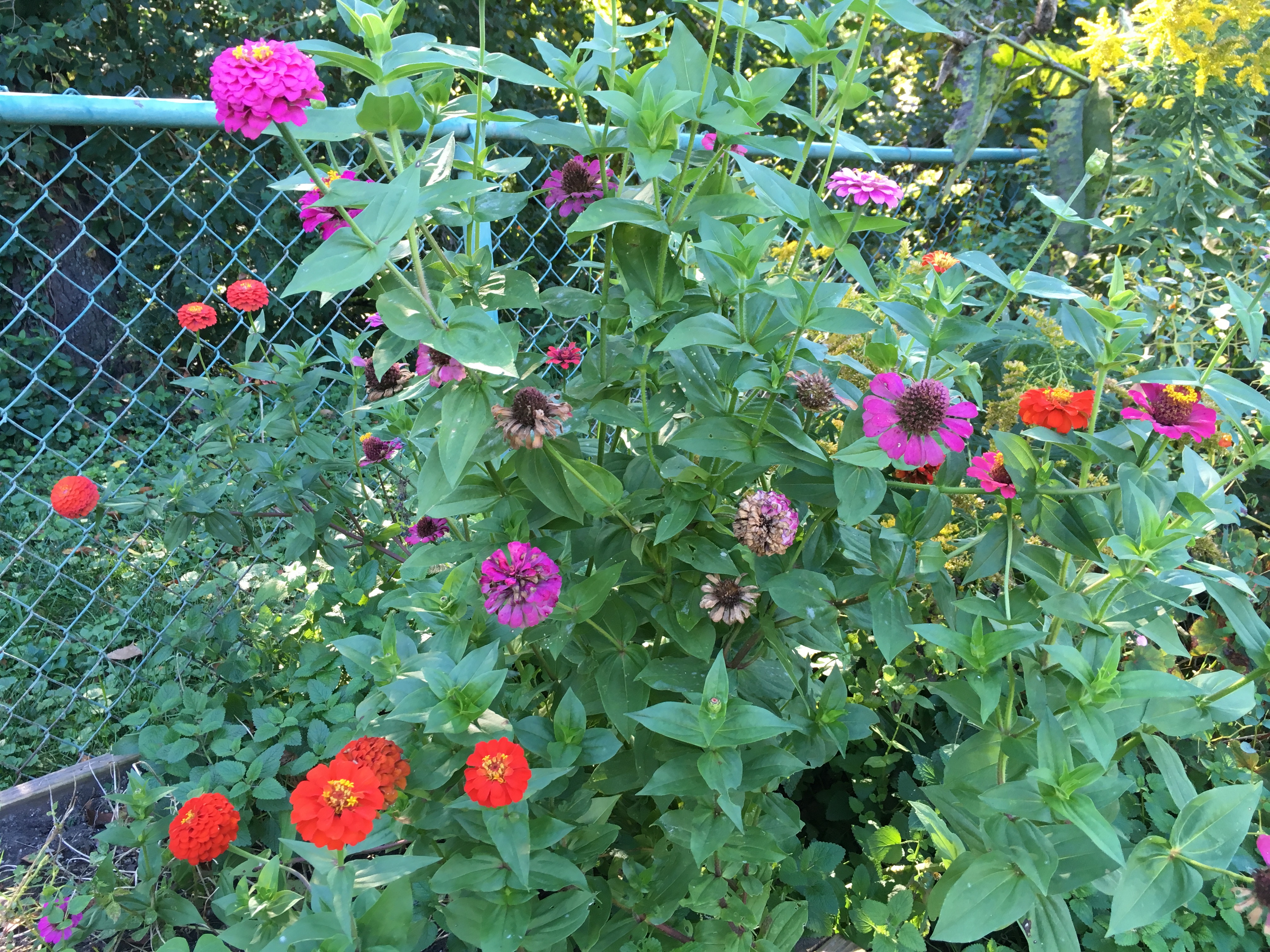
 We’ve solved a few mysteries, too. In letting some of our garden areas “go native,” we inevitably end up with a few plants that we can’t identify… at least not at first.
Early this spring, two plants grew quickly in our gardens. In past years, I would have said, “oh, weeds,” and pulled them immediately. But this year, in the spirit of gardening adventure, we decided to let them grow and see what they would become. Even though they were familiar-looking “weeds,” we didn’t know what they were. So, we waited. And we waited. And the plants grew and grew. By the end of July, they showed no signs of blooming or even forming buds, and the leaves had been no help in revealing the plants’ identities. By the end of August, there was still neither bud nor bloom.
Finally, around mid-September, there were signs of both–extremely tiny buds on one plant, and faint yellow flowers on the other. The yellow one is, of course, goldenrod, and what a spectacular plant it is! It has produced a spectacular array of tiny yellow flowers, often looking like Nature’s own fireworks display.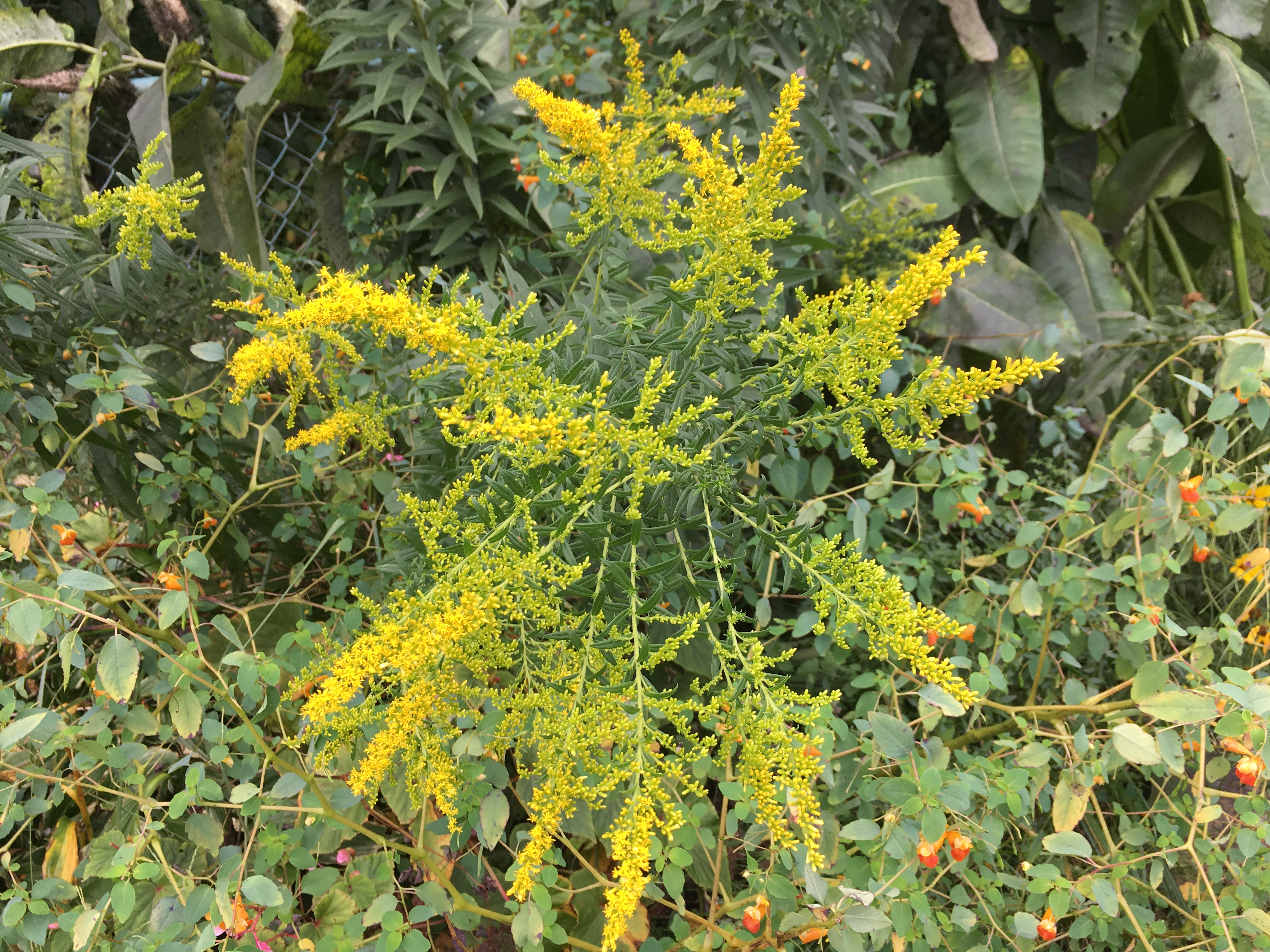
The other one, more subdued but still beautiful, is the white aster. Slowly but surely, this plant is becoming awash in dainty white flowers. 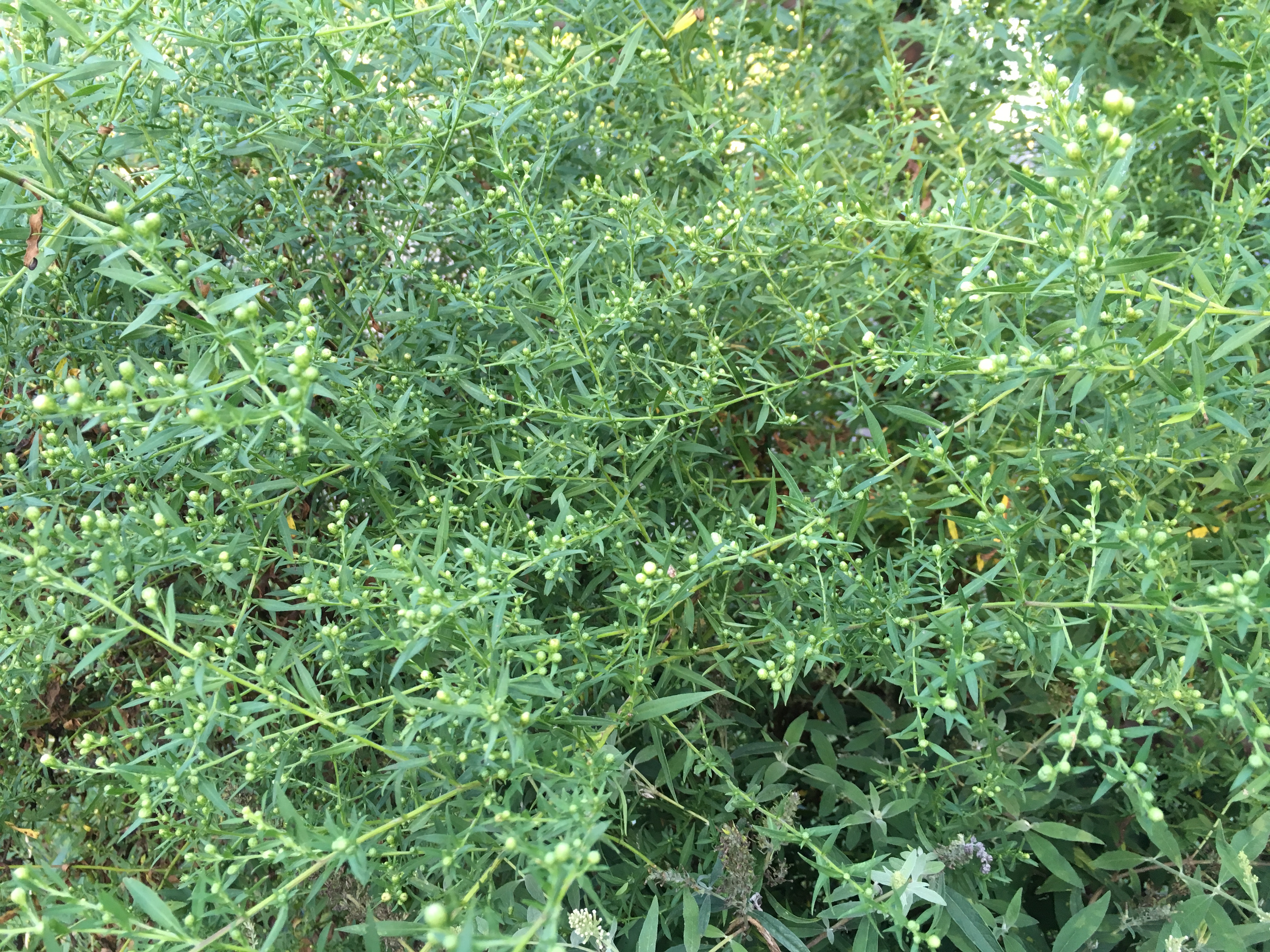
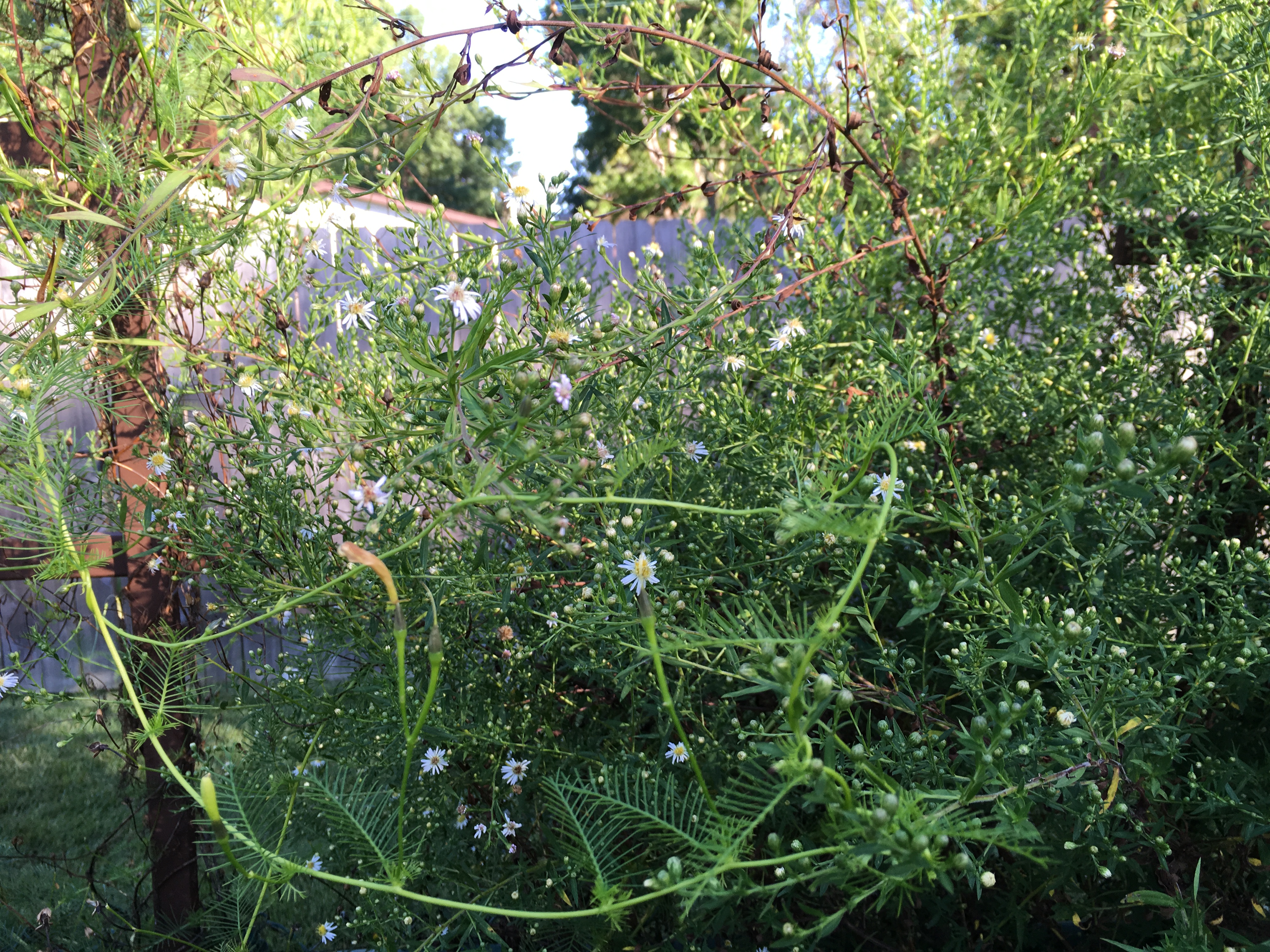 In another week, it will be fabulous. Love the late bloomers!
We had a real surprise this morning. As I was looking to see what happened to our compass plant (it just didn’t do too well this year), I noticed some bright white densely clumped flowers among the tall grasses. I had seen these before–white snakeroot! 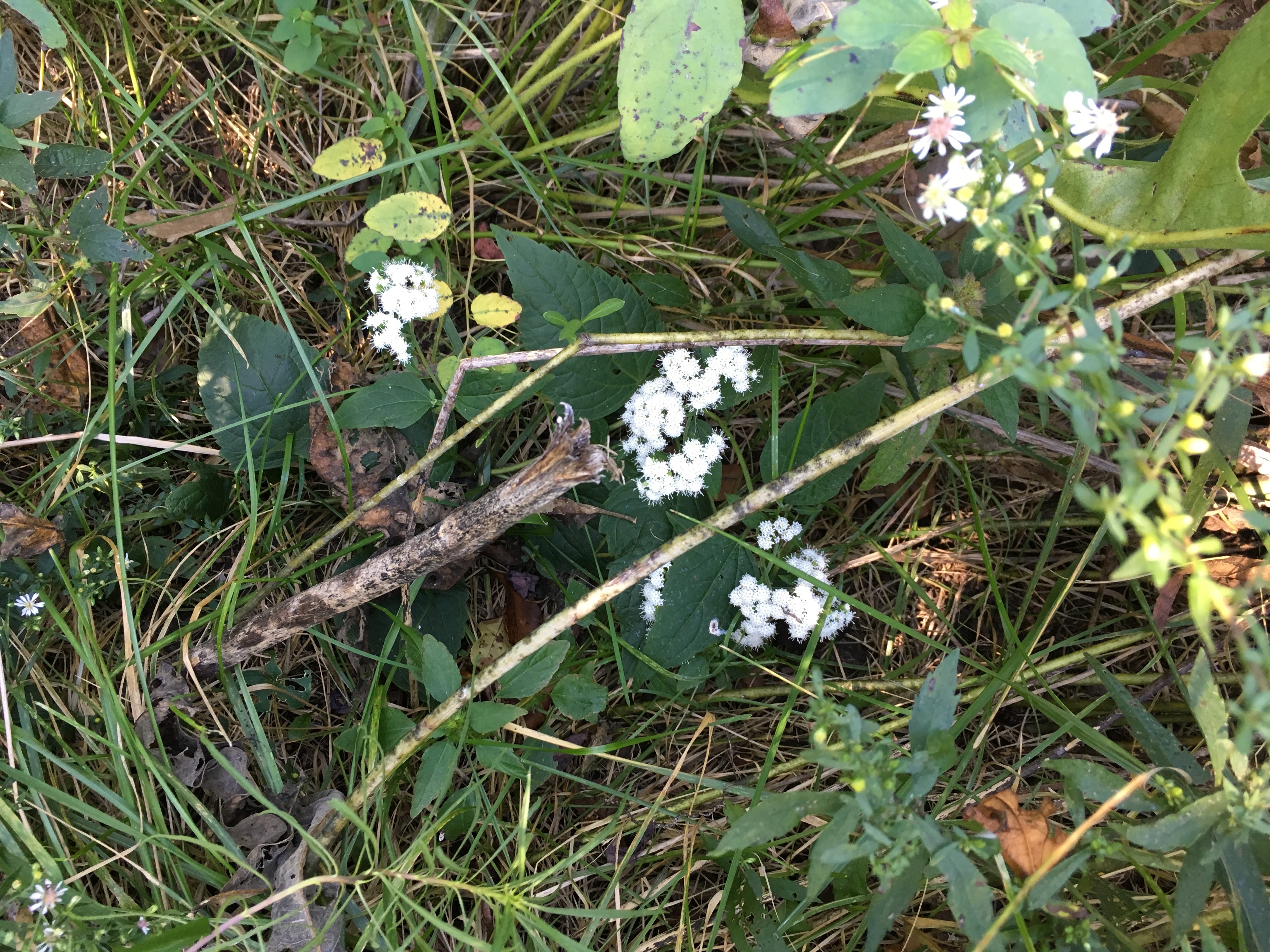 This was exciting because we had not planted it (like the jewelweed… see earlier blog post) AND it has an interesting story/legend attached to it.
White snakeroot (ageratina altissima) is a member of the aster family and is poisonous. It contains tremetol, a substance that can cause “milk sickness” when you drink milk from cows that have eaten the plant. The story is told that Abraham Lincoln’s mother died from milk sickness, along with many early European settlers in North America. The plant stem and leaves are apparently very bitter, but I guess the cows will eat it if there’s nothing else. It’s beautiful, though. Again, our philosophy is let things go and see what happens. Always interesting! 🌼
 Garden & Sky