January 1, 2017 – Looking out the kitchen window this morning, our sunny thermometer reads 44°F, but I don’t believe it. A quick check of the NWS website confirms my suspicions… it’s only 28°F. Still, that’s not too bad for early January. I repeat that to myself as I put on my barn coat and head for the garage. The coffee’s brewing, but I’ve found that I can’t really enjoy my morning cup until the birds have been fed. Silly, really, because the birds would do just fine without me. Nevertheless, I scoop out some peanuts for the bluejays, cardinals, and titmice and fill up the peanut feeder. Then it’s two more trips from the garage to the back fence with sunflower seed to fill up the feeders for the sparrows, the wrens, and the chickadees. These birds are our “regulars,” although we occasionally see a nuthatch and the red-bellied and downy woodpeckers. Of course, the grey squirrels just eat anywhere and everywhere–we’ve long since stopped trying to “squirrel-proof” the feeders. They’re all welcome here.
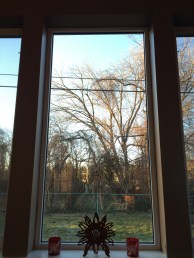
Back in the house, I find a comfortable spot in the sunroom with my coffee, a blanket, and Samson. With everybody fed (including Samson), I can now watch the backyard wildlife activity essentially guilt-free.
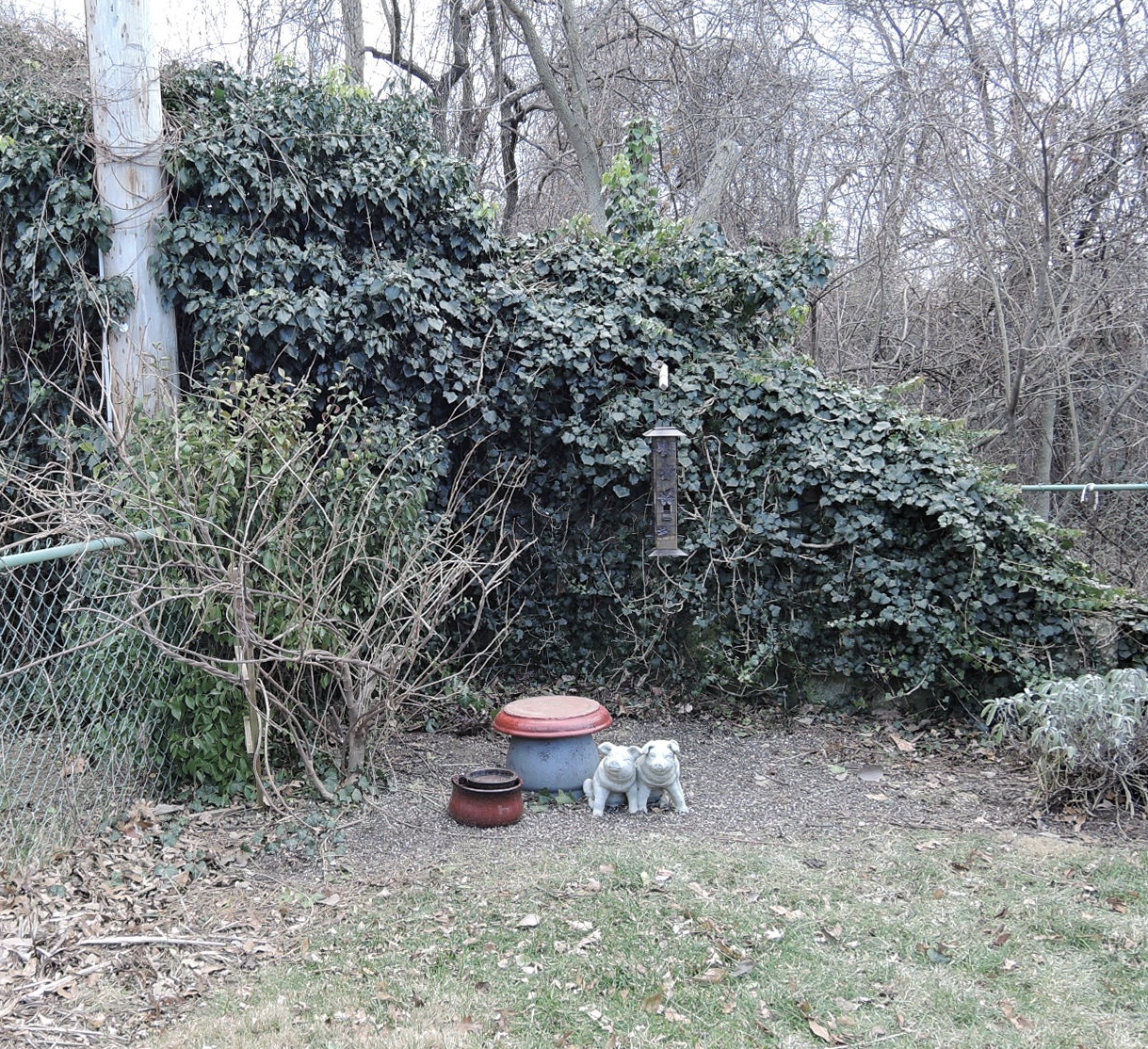
The small, fluffy brown sparrows are at the feeders almost before I get back in the house. They benefit from the thick wall of English ivy growing in the back corner of the yard–perfect shelter and almost-perfect cover from the hawks and cats. The ivy leaves rustle and the vine tendrils flap as the sparrows zip in and out with their seeds.
Closer to the house, the peanut feeder provides some really amazing viewing. The blue jays glide in from the nearby power lines like feathered jet aircraft on final approach, announcing their intent to land with a startling hawk-like cry. They are the most adept at piercing and extracting peanuts still in the shell, usually arriving and leaving before I can grab my camera.
The cardinal and the titmouse are less skillful, yet incredibly determined… and this persistence pays off. If, after a bit of tug-of-war, they can fly off with a peanut in the shell–great! That seems to be the preferred method, and you can’t blame them for wanting a bit of privacy while eating breakfast.
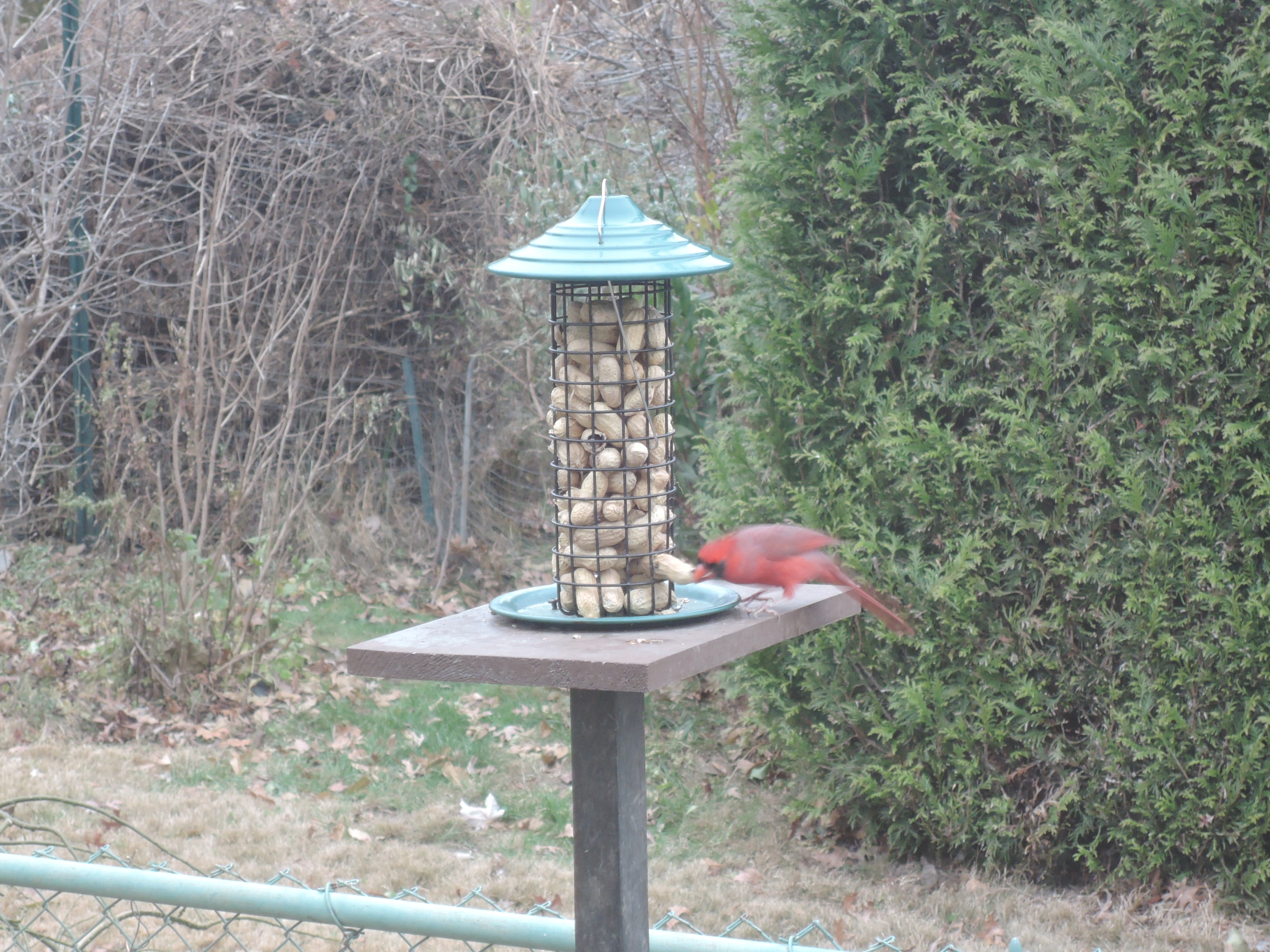
However, sometimes things don’t go as planned, and they wind up just pecking through the shell and eating the peanuts at the feeder. Either way, a meal is achieved.
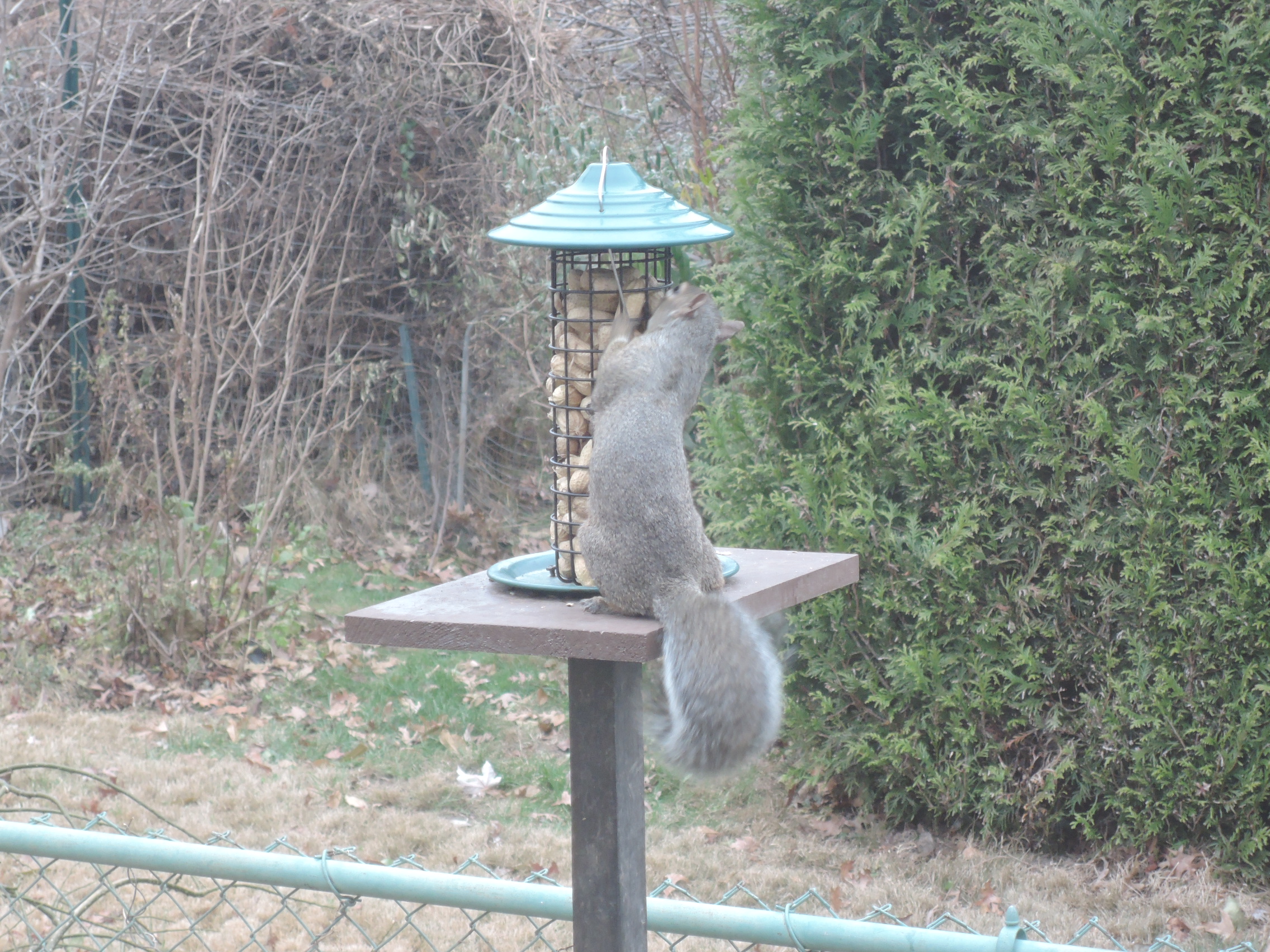
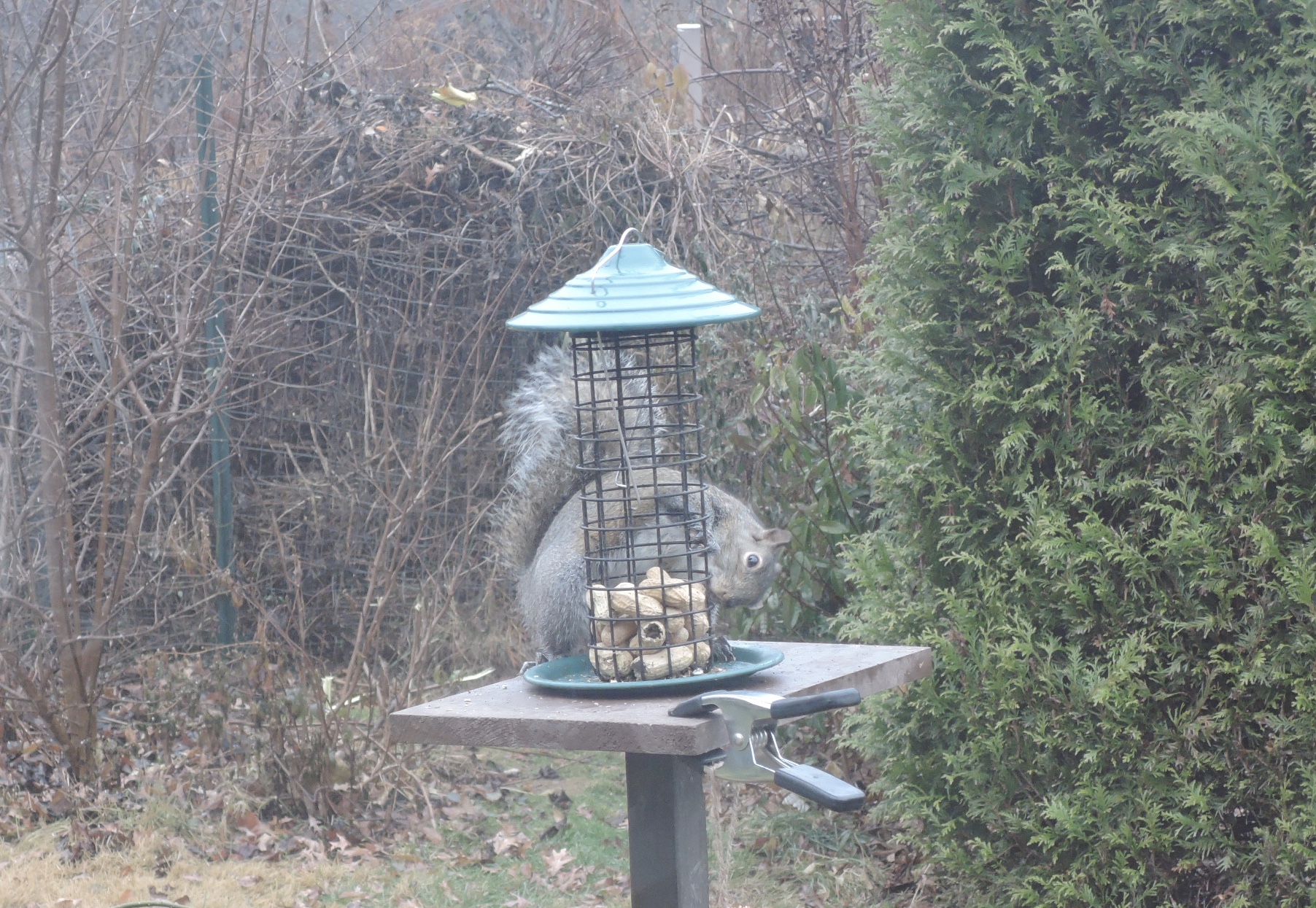
The squirrels just go for brute force, often destroying the feeder in the process. We’ve found that the wire (heavy wire) feeders last the longest, but often need some modification. Joe had to fasten this feeder’s top more securely to prevent the squirrels just dumping the contents all out at once. Now, they still manage to empty it in record time, but at least the other birds have a chance to get their fair share, too! But they have to be quick…
We got three cute seed cakes from my brother for Christmas, each shaped like an owl’s head. Joe attached one of them to the bottom of the bird feeder. Here’s a sweet titmouse grabbing a quick bite:
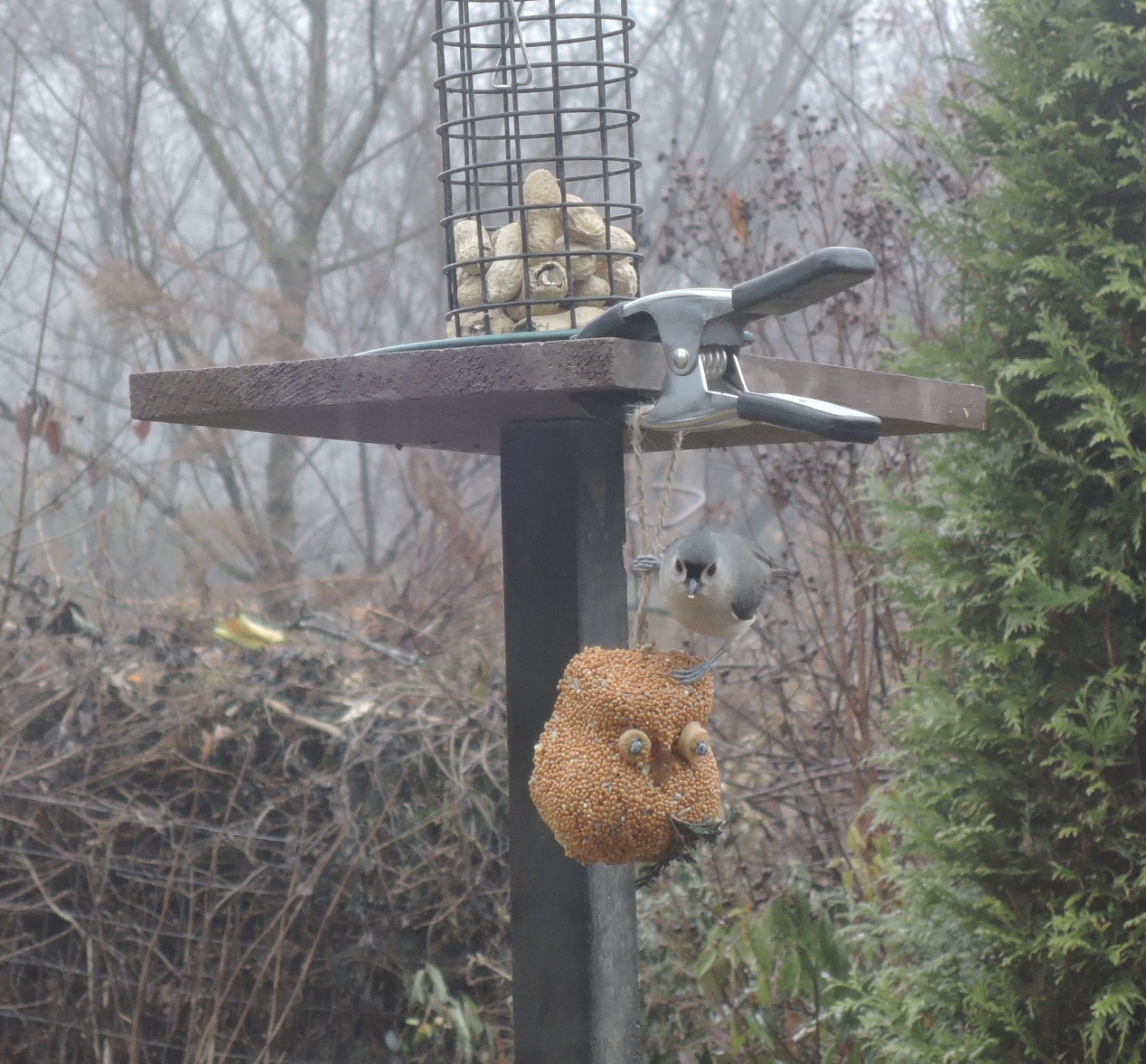
This lasted only a day before we found the seed cake head in pieces on the ground… we suspect squirrels. Seed cake head #2 is hanging from the corner of the shed roof. So far, it has survived about a week. Perhaps the squirrels don’t like the slippery shed roof. As long as there’s easier and tastier pickings elsewhere, we may never know… but squirrels usually find a way.
 Garden & Sky