Gardens

Garden Tour – September

You never know with gardens. Here we are at the end of the summer and moving into “harvest time,” yet our gardens will insist on going their own way. I’ve seen pictures in magazines and on websites of huge wicker baskets full of colorful vegetables, but for some reason, this year, our garden has not been productive in that way. I suppose we can blame it on the weather–we did have that incredibly wet June–but who really knows? But the thing with gardens–and with nature–is that you need to appreciate what you get. So, looking at ours in late September, I do see a “harvest” of many wonderful things.

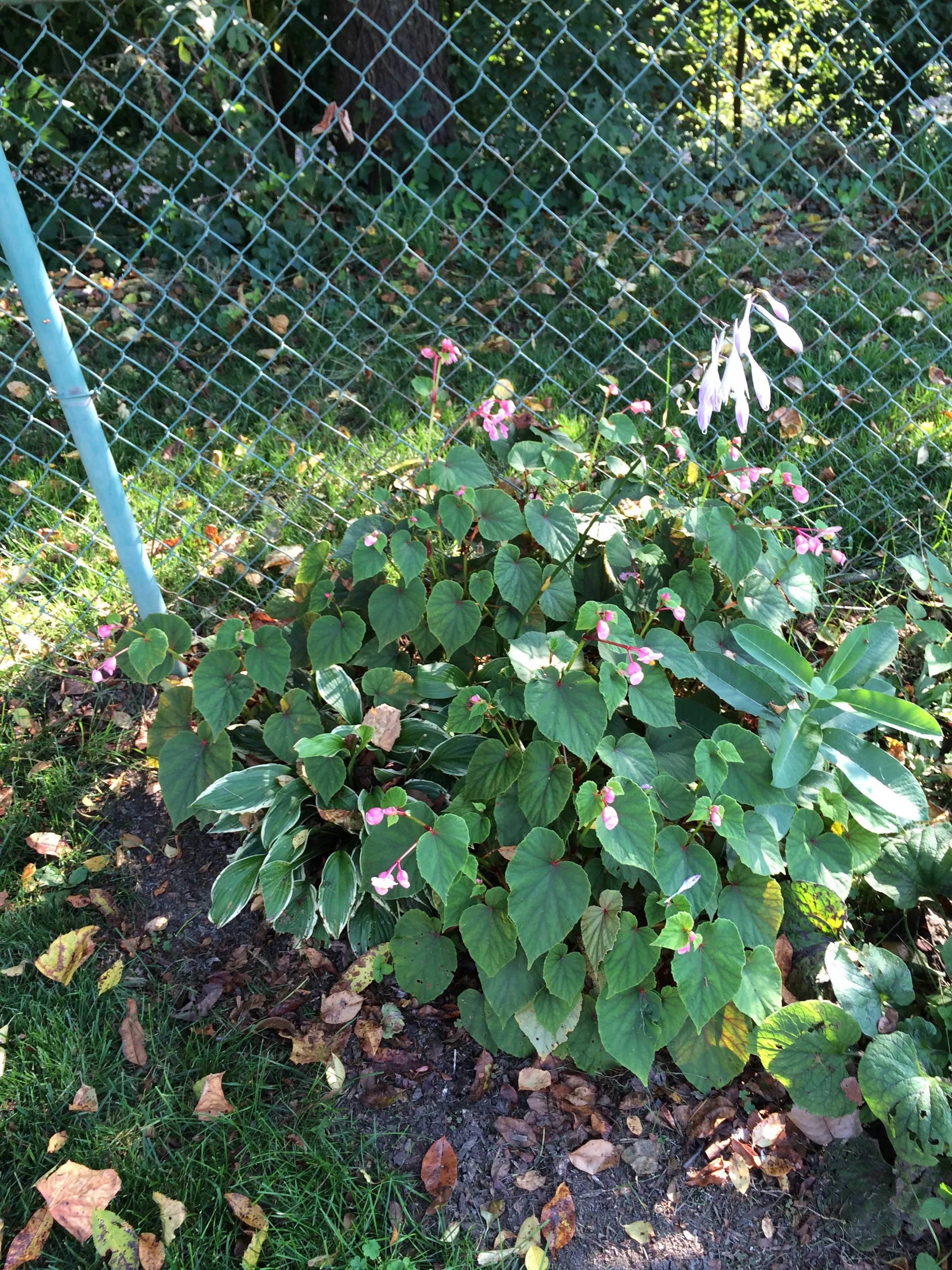
First, our wild begonias in the back corner garden are looking better than ever. They share quarters with hosta and other shade-loving plants that seem to wander in. We planted these years back, and they’ve struggled, but now their deep green leaves and graceful pink flowers really catch the eye.
IMG_1846
Wild begonia

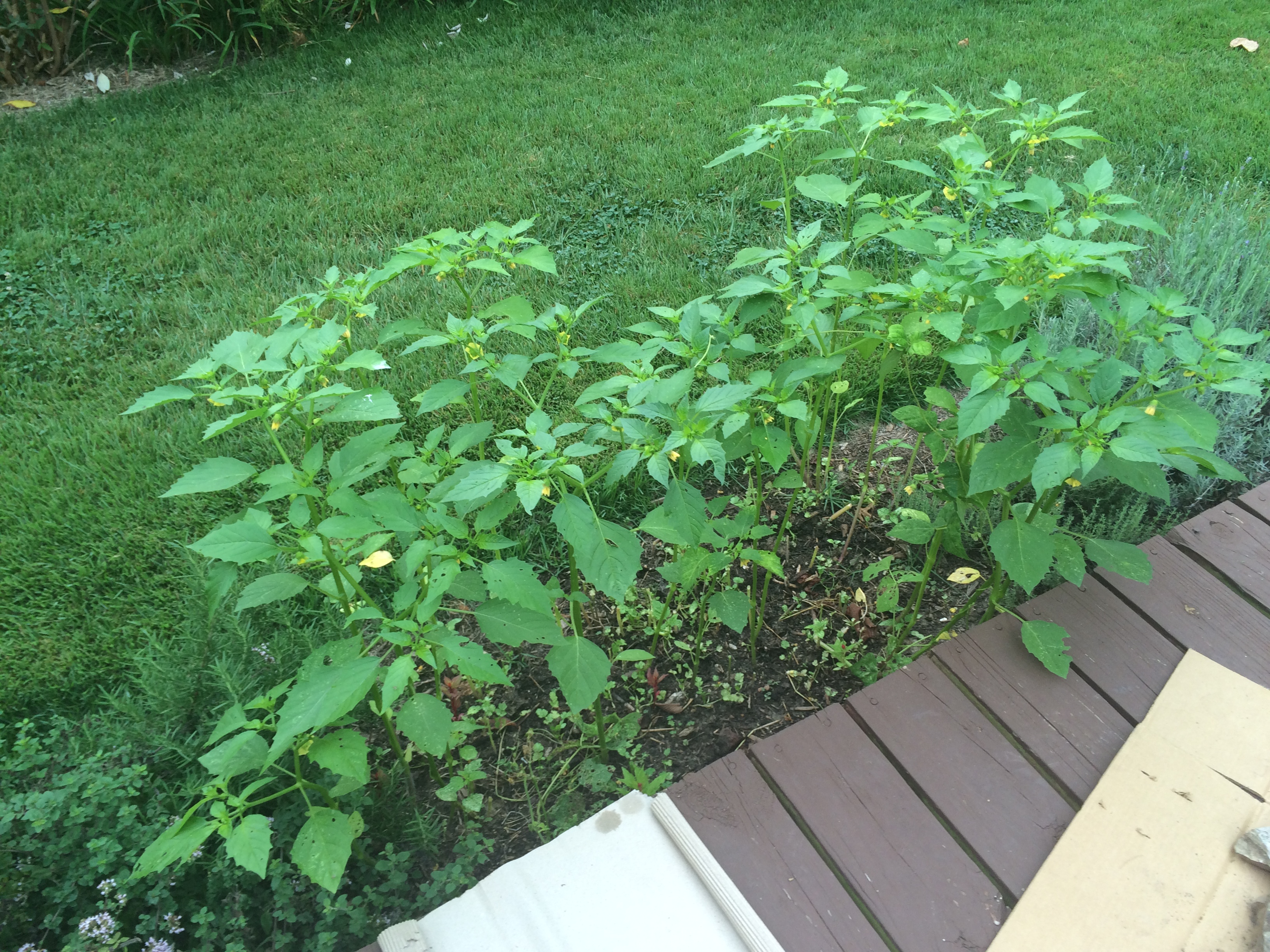
What would a garden be without a bit of mystery? We think these plants may be tomatillos, but we’re really not sure. This is what happens when you dump a mixture of seeds out to fill in a bare spot. We had cilantro growing here earlier in the summer, but it died off. Now, we have a strange mixture of plants sprouting up. And although they do look a bit like tomatillo plants, we didn’t think we had any tomatillo seeds. Surprise!?
IMG_1850
Tomatillos… maybe…

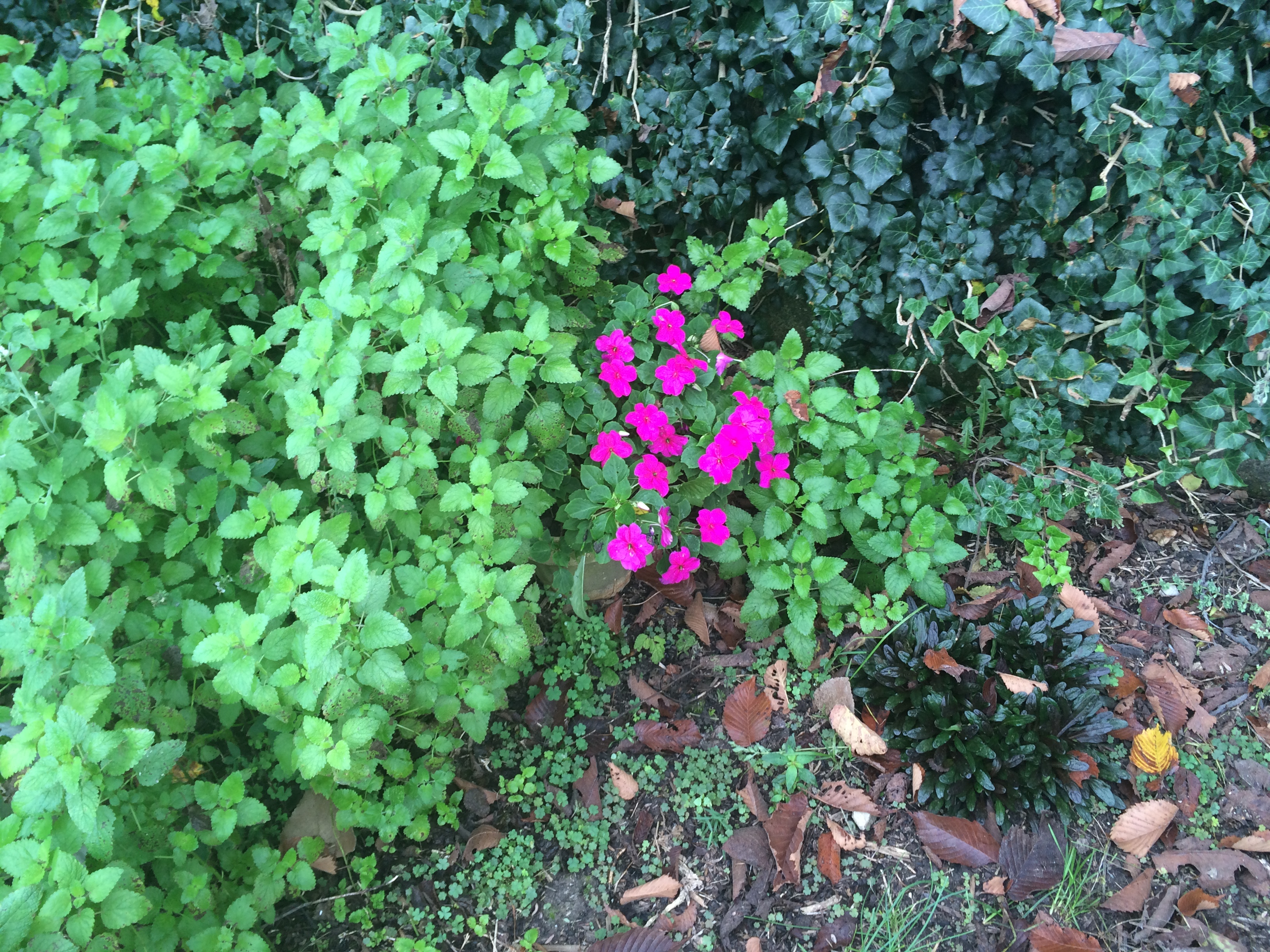
This pot of impatiens (although you can’t really see the pot) adds a bit of color to another back corner shady garden. The impatiens are surrounded by one of my favorite herbs–lemon balm. Nothing smells as good!
IMG_1852
Impatiens among the lemon balm

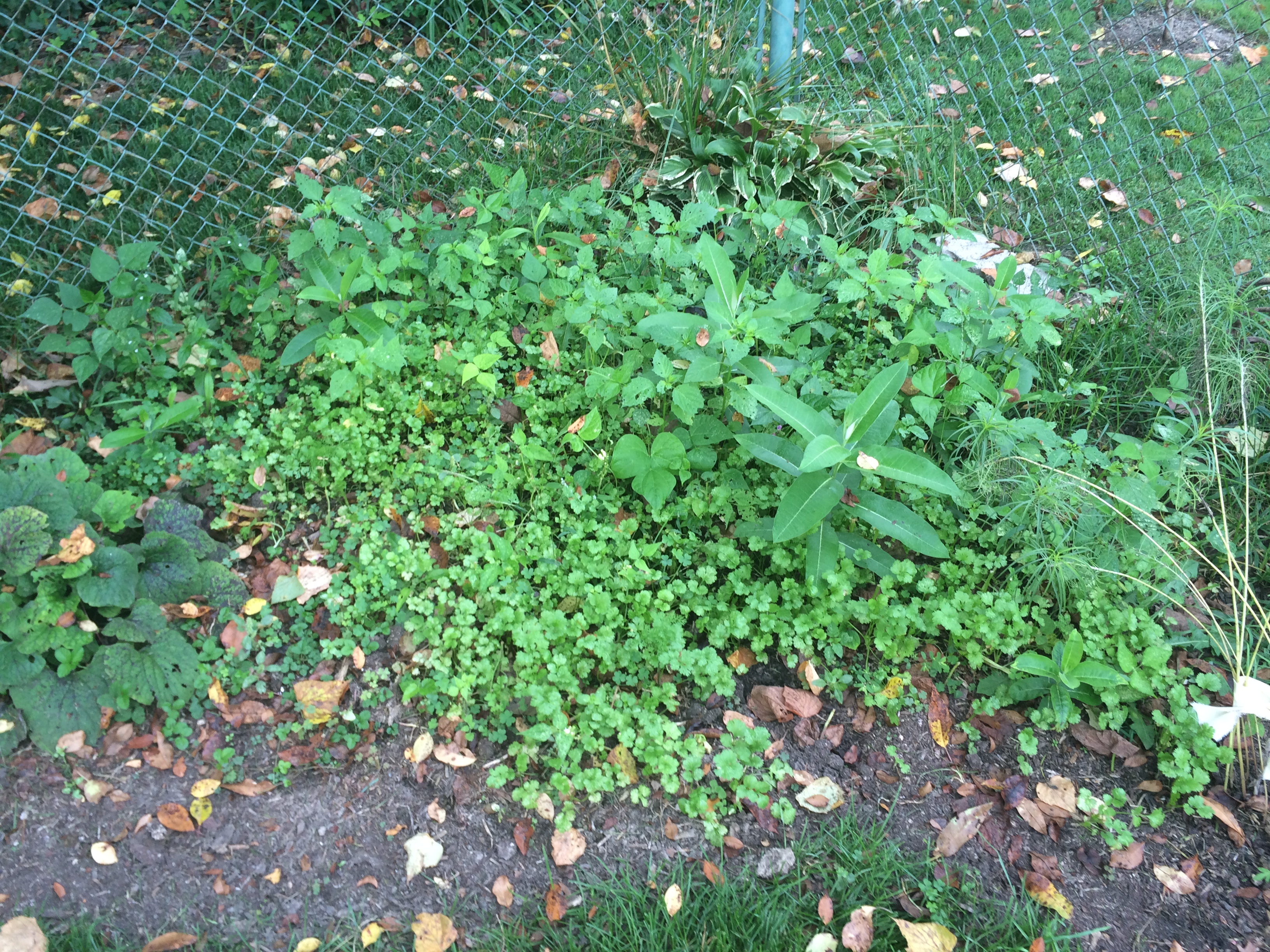
And since I can’t bear to be without cilantro, we planted another round of it in the corner of the backyard next to the wild begonias. It’s probably not quite sunny enough for it there, but so far it’s surviving.
IMG_1853
Late season cilantro

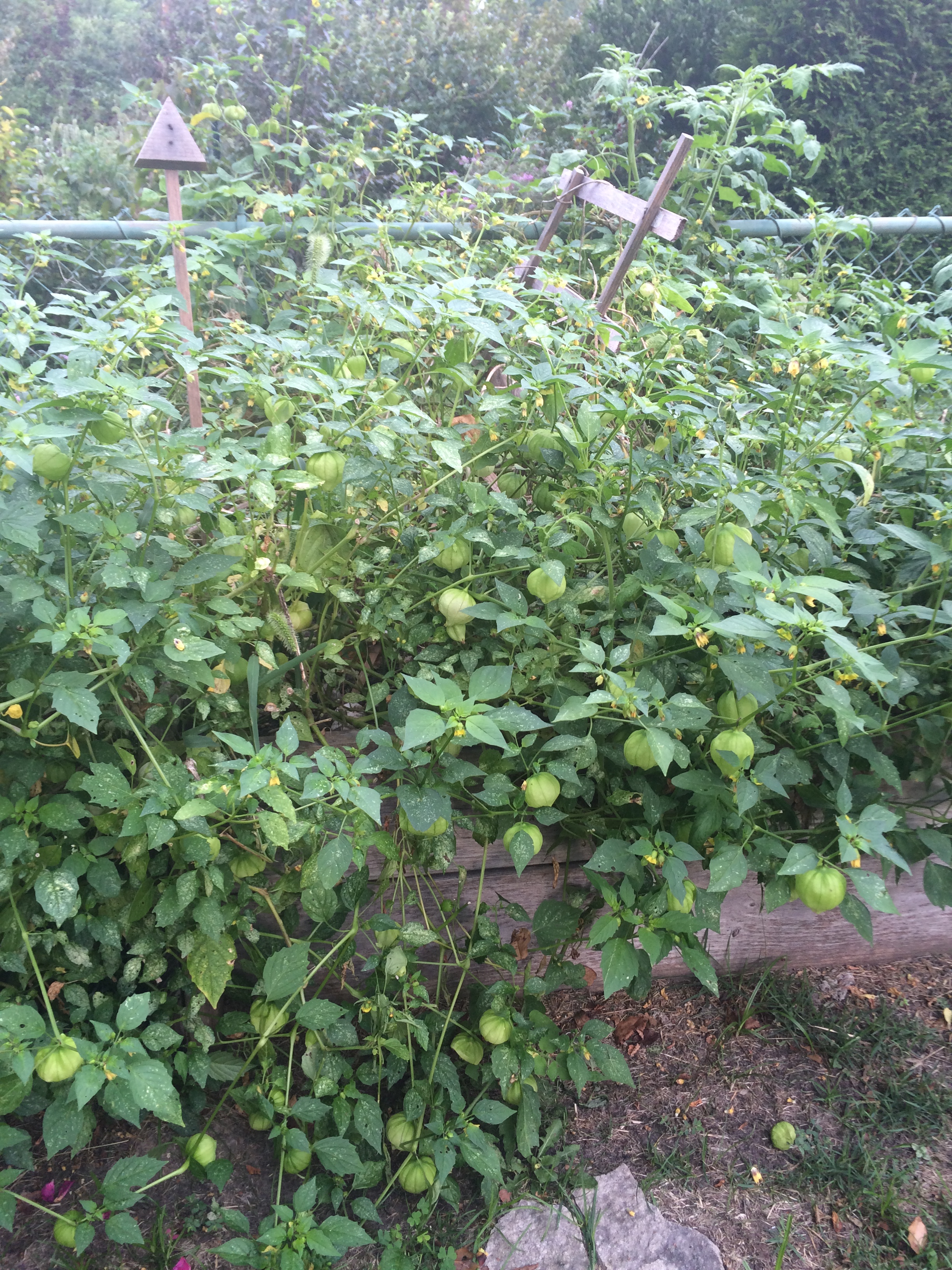
Our confirmed tomatillos continue to produce like crazy.
IMG_1854
Tomatillos… definitely!

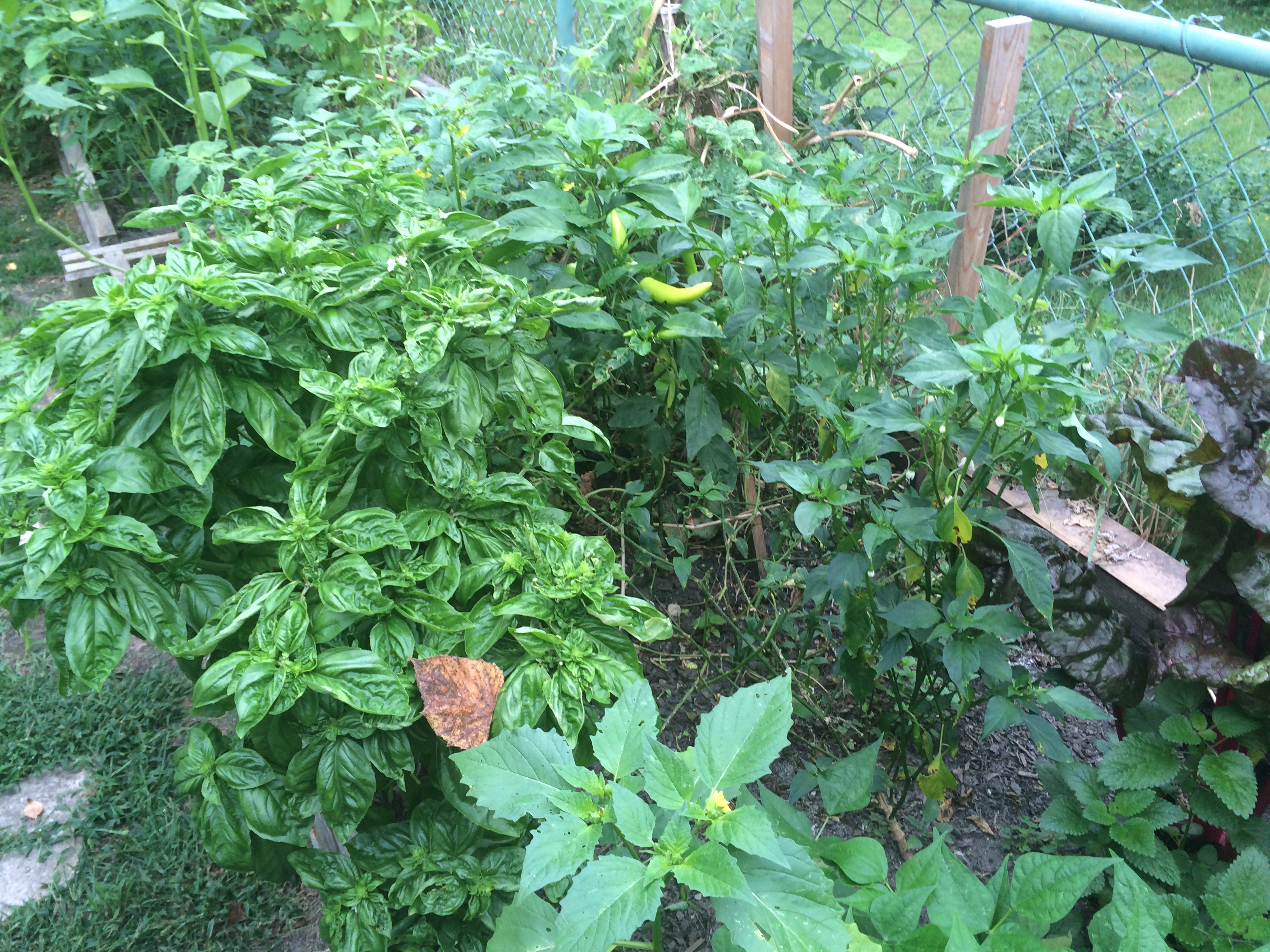
Then finally we come to the basil and peppers. These guys used to be shadowed and crowded by some huge tomato plants that never really produced anything but green tomatoes that then split and rotted. So, we cleared those out and let the other plants spread out a bit.
IMG_1855
Basil and peppers

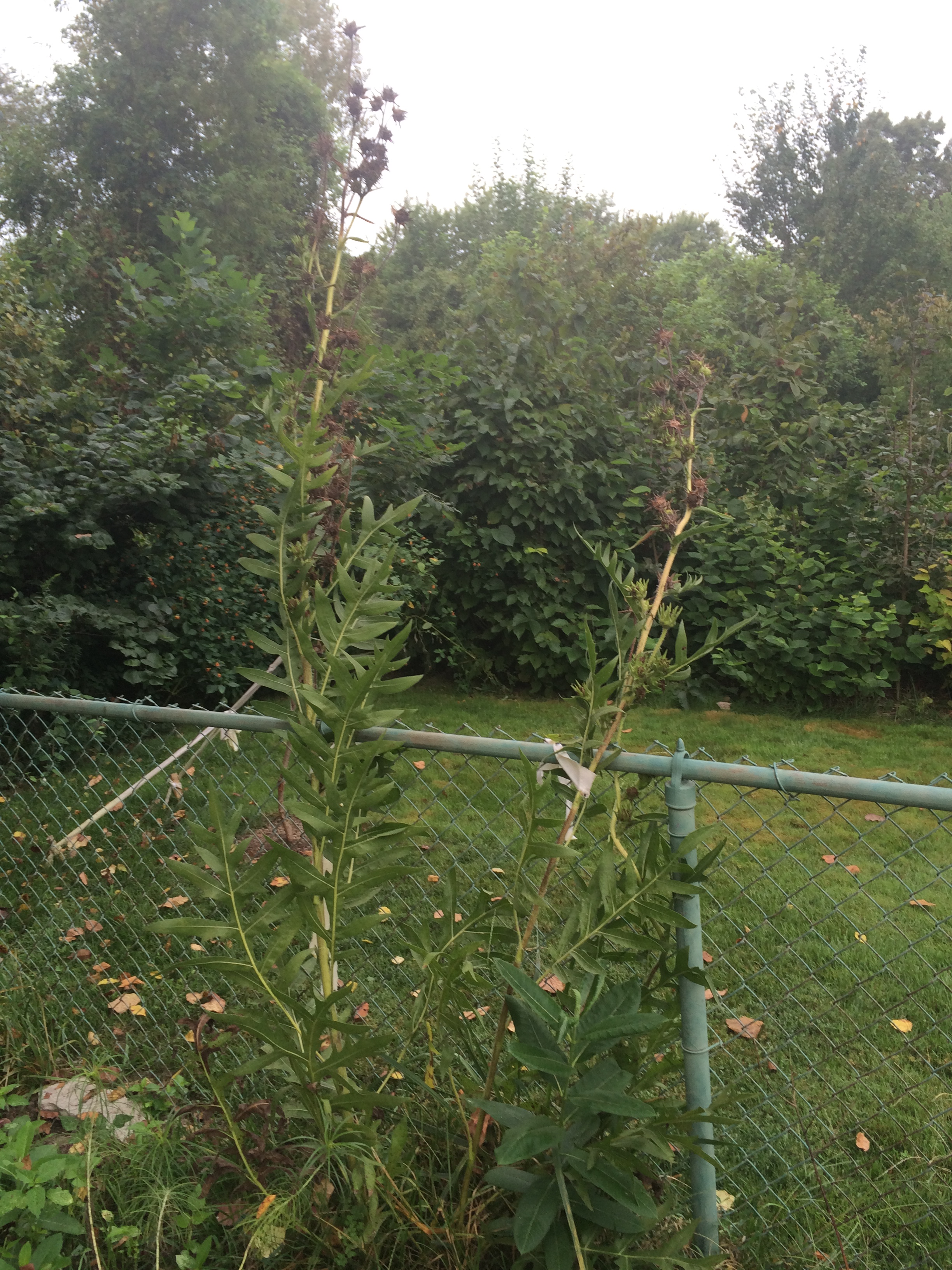
Well, to wrap up this month’s tour, let’s check in on the compass plant. Still standing tall, but the blooms are finished. I can’t wait to see what it does next year.
IMG_1856And in the front yard? Here’s brick pig in a beautiful blanket of white alyssum. A few gerbera daisies add some nice contrast on the tail end! 🙂
IMG_1900

Gardens

Garden Tour – August

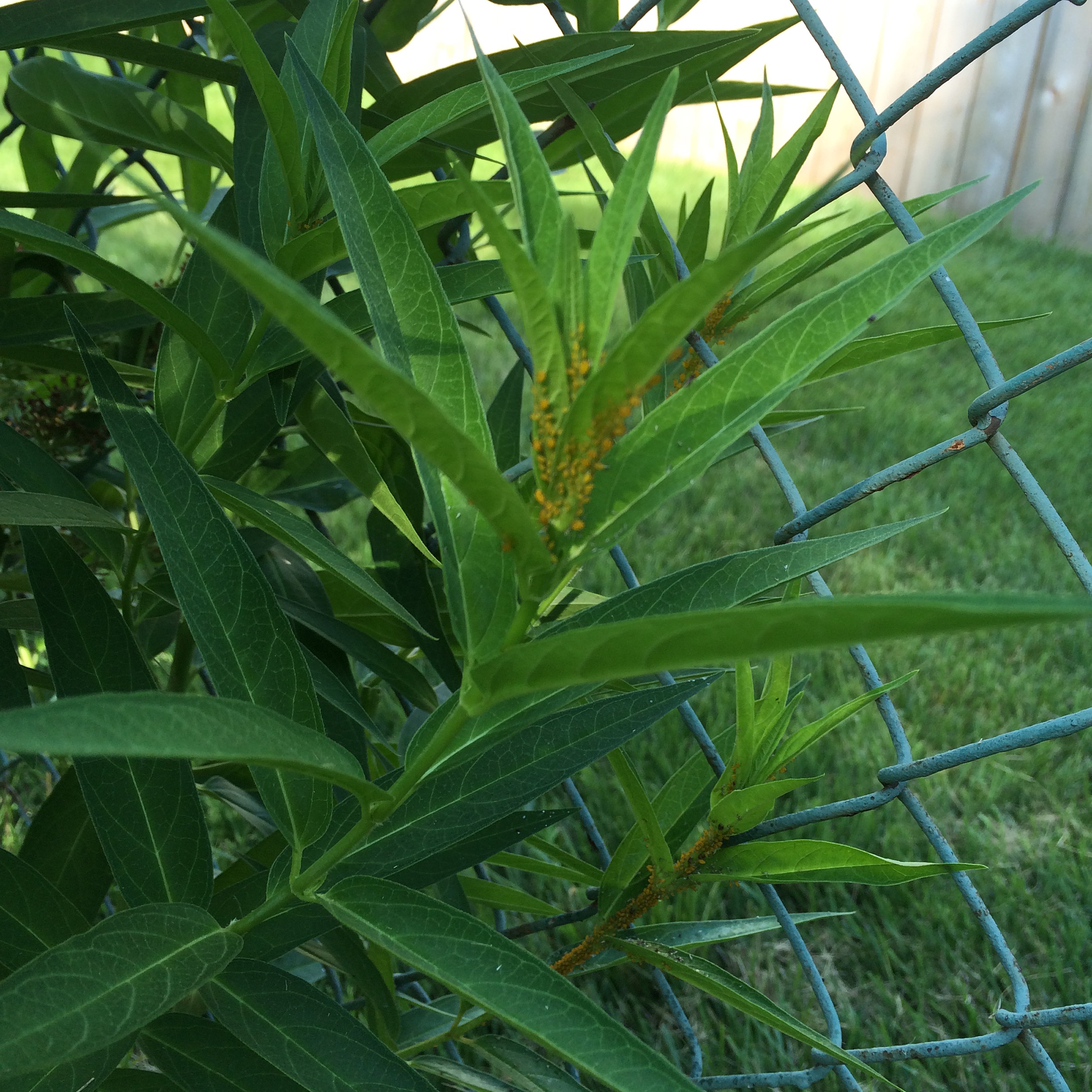
Got aphids?

IMG_1594

We sure do. But, I’ve come to realize, that can be a good thing. For one, it means that the plant that you weren’t quite sure was some variety of milkweed probably is indeed some variety of milkweed. Yay! Aphids LOVE milkweed plants. So, this plant pictured above is some type of milkweed. I’m not sure which type. There are several…. swamp milkweed (that’s what I *think* it is), butterfly milkweed (seems a bit redundant, but whatever….), common milkweed (classic!), and tropical milkweed (would love to try this one), just to name a few. Time will tell. We just added this guy to our east side garden this summer, so it may or may not bloom for us by the end of the season. That would help with the ID-ing, I think.

IMG_1659
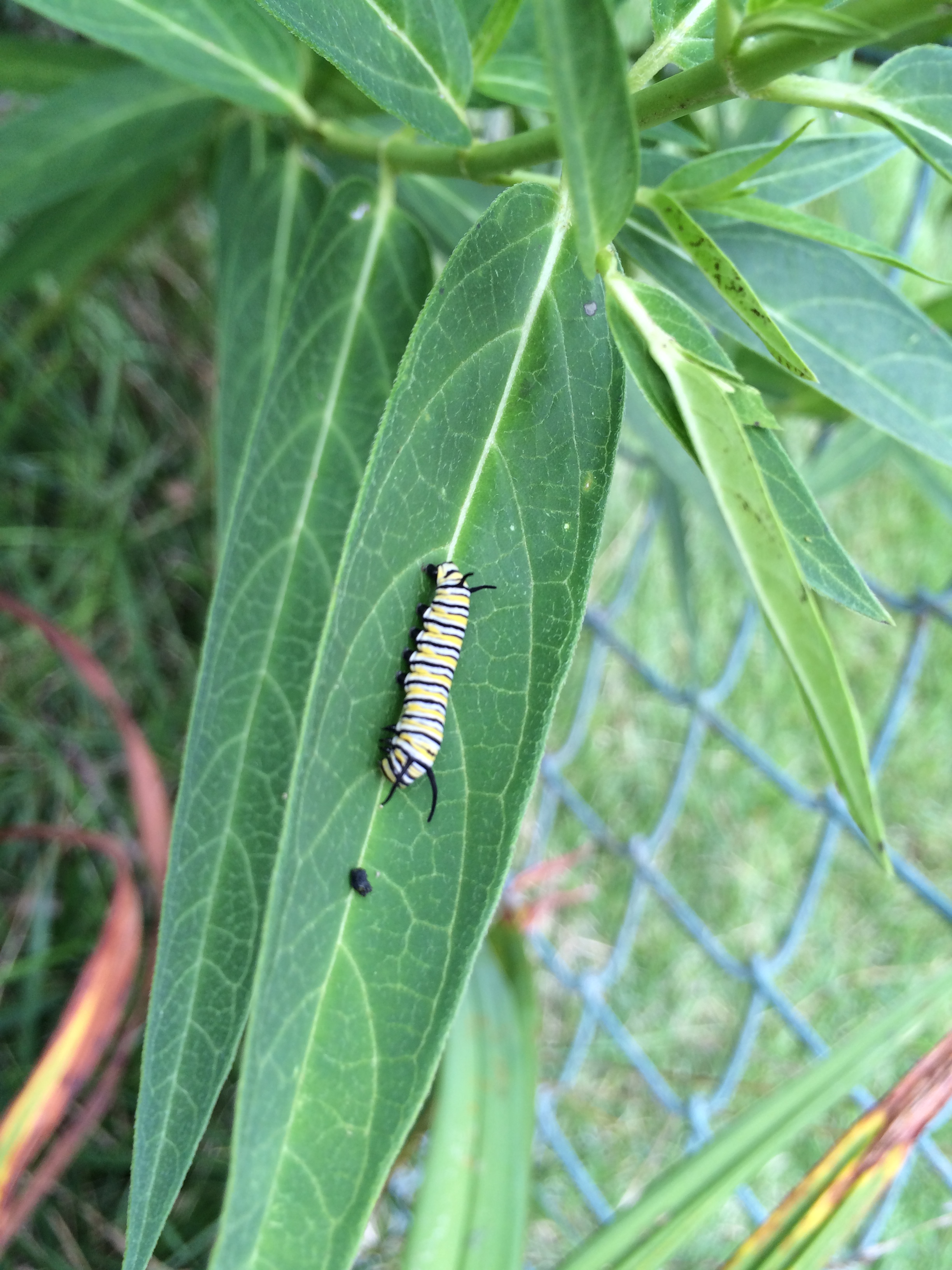
Monarch caterpillar on milkweed leaf

However, there’s another reason that it is definitely some type of milkweed….

Now, no self-respecting monarch instar would be seen on a plant that wasn’t a milkweed. I was so excited to find this guy! But, back to the aphids. The second cool thing about having aphids is that you can watch the ants “interact” with them. And when I say “interact,” I apparently mean herd, control, manipulate, and otherwise subdue the aphids so that the ants can eat sugary secretions (and sometimes them!) at their leisure. It seems that ants have chemicals on their feet that tranquilize the aphids and have been observed biting the wings off aphids to keep them nearby! Supposedly, the aphids get something out of the deal, but, to me, it seems like just another example of the ant world getting a bit too powerful for its own good. At any rate, it’s interesting to watch.

So, other than aphids, ants, and milkweed…. what else is up in the August garden tour?

IMG_1670
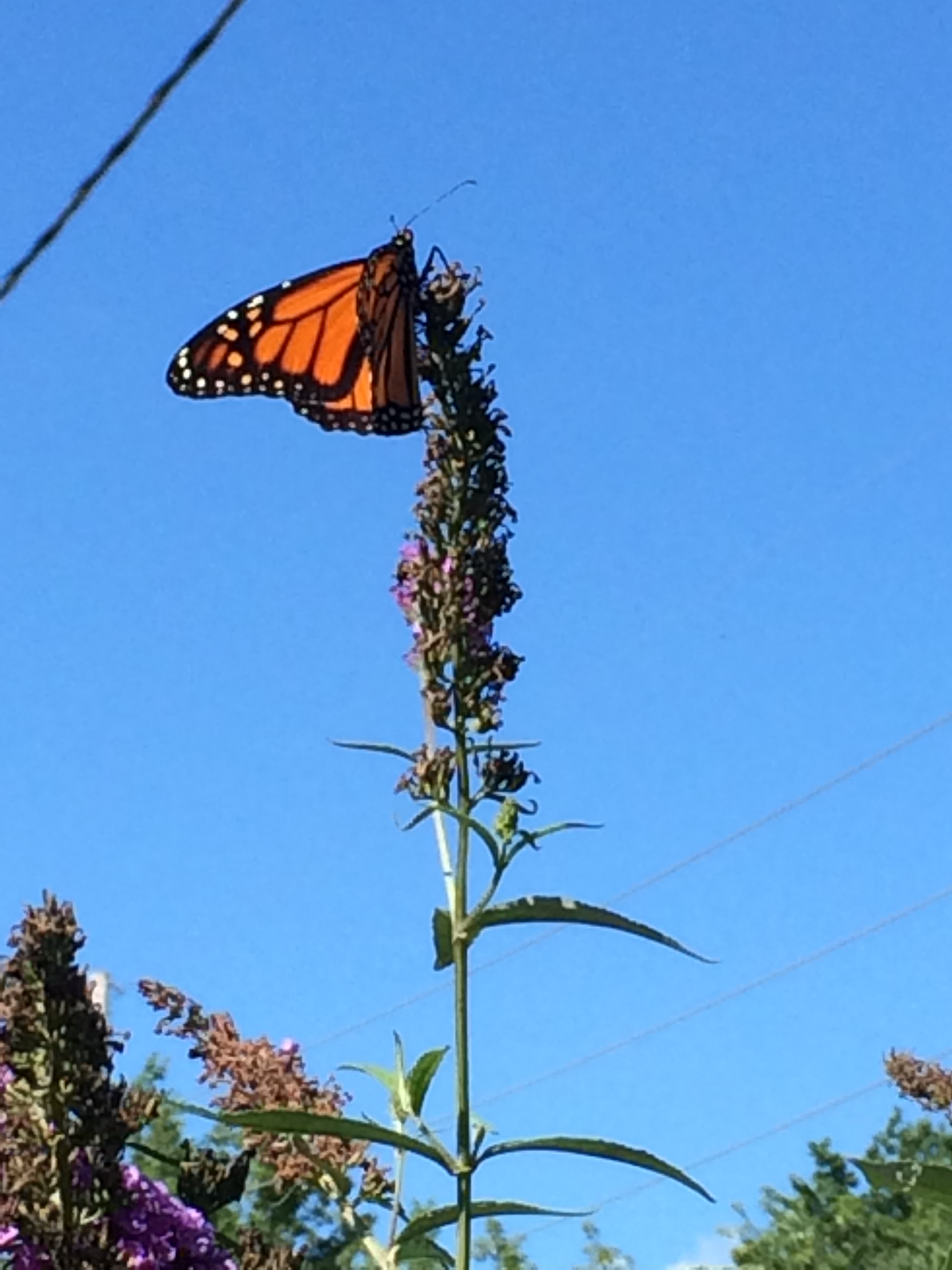
Monarch at the top of the butterfly bush

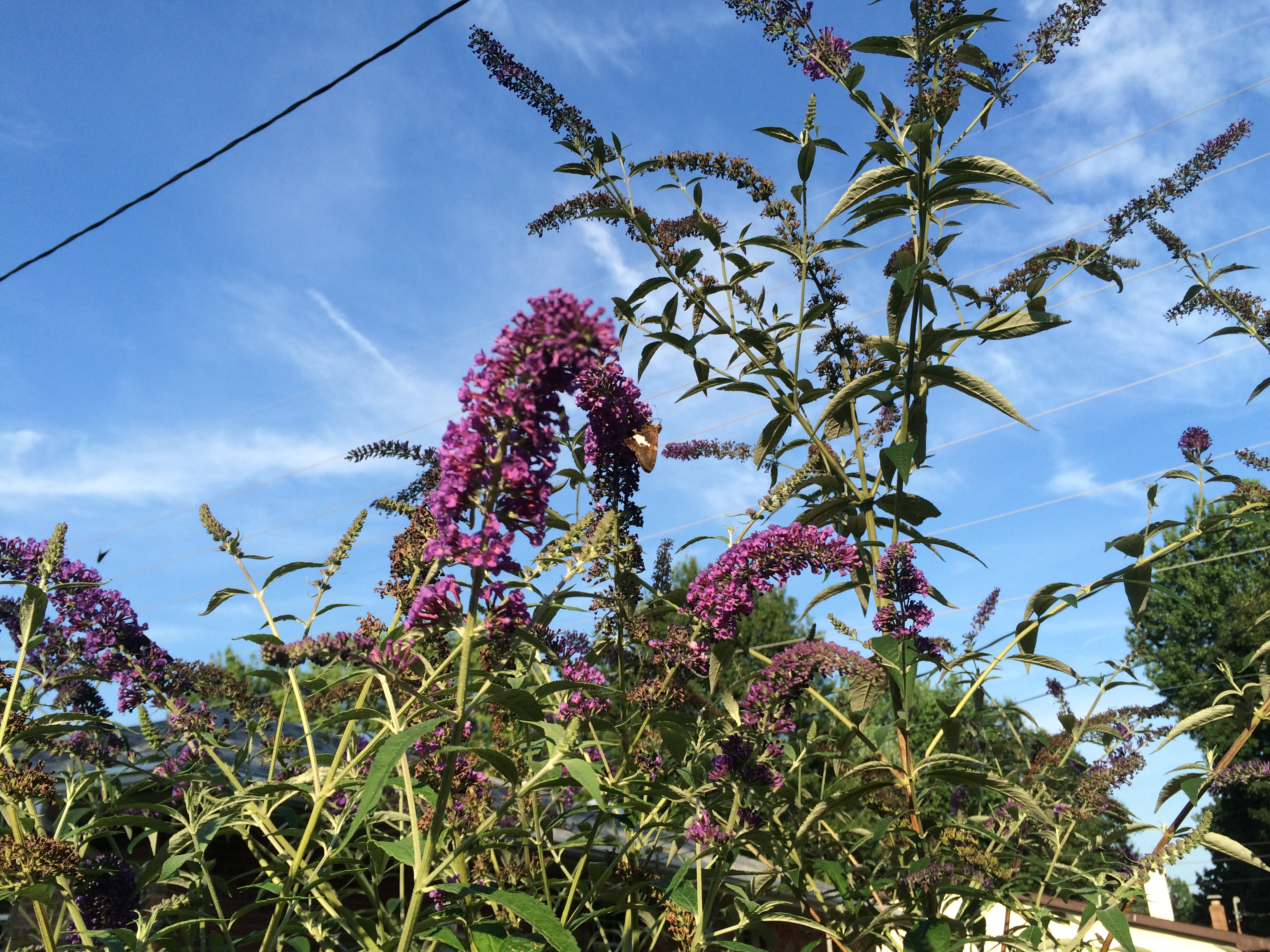
Well, as advertised, the butterfly bushes are doing their thing… attracting a wide variety of butterflies and skippers and sometimes hummingbirds for our viewing pleasure.

A skipper!
A skipper! A silver-spotted skipper!

Skippers and butterflies tend to have knobby ends to their antennae, as opposed to moths, which have feathery antennae. The skippers have antenna knobs that are hooked back… kind of like a crochet hook. Good luck getting them to hold still long enough to get a good look!

So, now we head into September and the official end of summer. It’s sad to see it end so quickly but exciting to contemplate the changes that fall will bring. Certainly cooler weather and fewer mosquitoes–please!!